
ACM seeks to transform urban cycling infrastructure with Lane Patrol in Chișinău
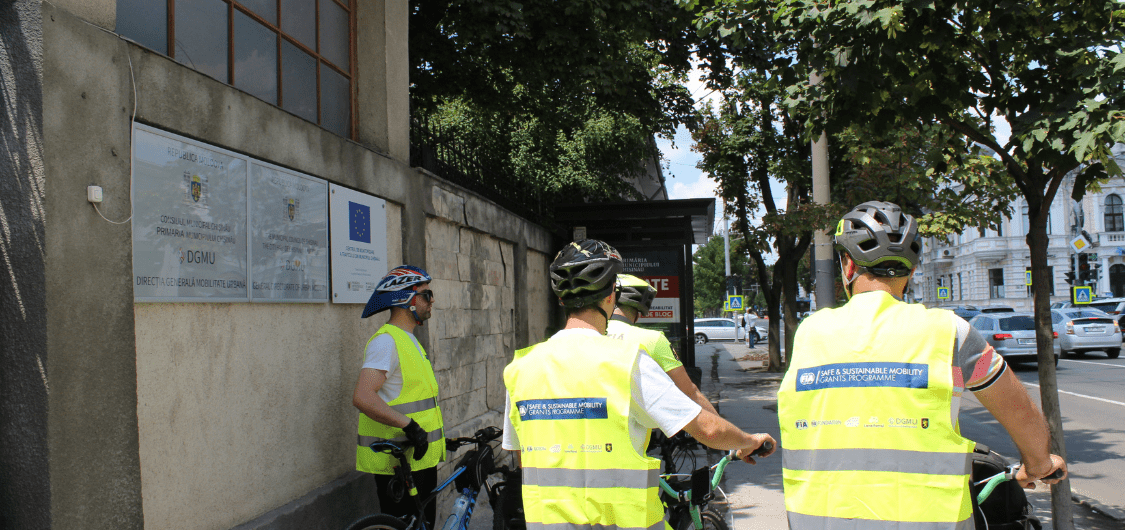
Micro-mobility is gaining significant momentum in Moldova’s capital city with more residents embracing sustainable forms of transport such as bicycles and e-scooters. In localities designed around vehicles and the movement of cars, however, new infrastructure is needed to support such positive steps towards sustainability to make roads safer for cyclists and other vulnerable road users.
To address this, our partner the Automobile Club of Moldova (ACM) has launched a new project in partnership with Lane Patrol, the General Department of Urban Mobility (DGMU) at Chișinău City Hall and the National Inspectorate for Public Safety (INSP), with the support of the FIA Safe and Sustainable Mobility Grants Programme, to transform how cycling infrastructure is planned and built in Chișinău.
The project titled, VeloSafe Chișinău: Data-driven Infrastructure for Vulnerable Users in Moldova represents the country’s first systematic, evidence-based assessment of urban cycling safety and will create the foundation for future improvements. In July, Matteo Ferrari, a Smart City Project Manager at Lane Patrol joined the ACM team and local authority partners for an intensive 2-day technical mission in Chișinău.
The mission involved training ACM, INSP and DGMU on how to use the Lane Patrol mapping technology to assess and audit the city’s major mobility corridors from the perspective of cyclist safety. An accredited supplier of iRAP’s CycleRAP methodology, Lane Patrol uses georeferenced cameras and digital mapping tools to survey road conditions and identify hazards such as missing signage and pavement defects, as well as potential conflict points between cyclists, pedestrians, and motorised traffic.
After this initial training and assessment, ACM and its partners gathered for a strategic meeting at the DGMU Traffic Monitoring Centre to discuss the field data and how its collection through the Lane Patrol platform can be used to support the implementation and monitoring of the Sustainable Urban Mobility Plan (SUMP) of Chișinău. Over the next 12 months, this methodology will be used to audit up to 80 kilometres of the city’s streets to assess the safety of existing routes and inform the planning of new infrastructure – including high-priority developments along Albișoara and Gheorghe Asachi streets.
Matteo Ferrari of Lane Patrol said,
“By utilising the internationally recognised CycleRAP methodology, the team will translate raw field data into visual, easy-to-read risk maps and safety scores. These insights will enable municipal engineers and city planners to simulate infrastructure improvements, with the explicit target of reducing high- and extreme-risk road segments by at least 50%.”
ACM CEO Tatiana Mihailova said,
“In Moldova, cyclists and vulnerable road users remain disproportionately represented in crash statistics. By replacing reactive, crash-driven interventions with proactive, data-led safety planning, VeloSafe Chișinău aims to create protected, connected corridors that encourage more citizens to choose active, low-carbon transport.”
Alongside these technical assessments, ACM and its partners will also host capacity-building workshops for municipal staff and a public roundtable to present their work and the policy recommendations they have developed from the data. Through this project, ACM is working to make cycling a safe and viable mode of transport and exemplifies an approach to infrastructural change which is empirically grounded and tailored to a city’s particular features.